
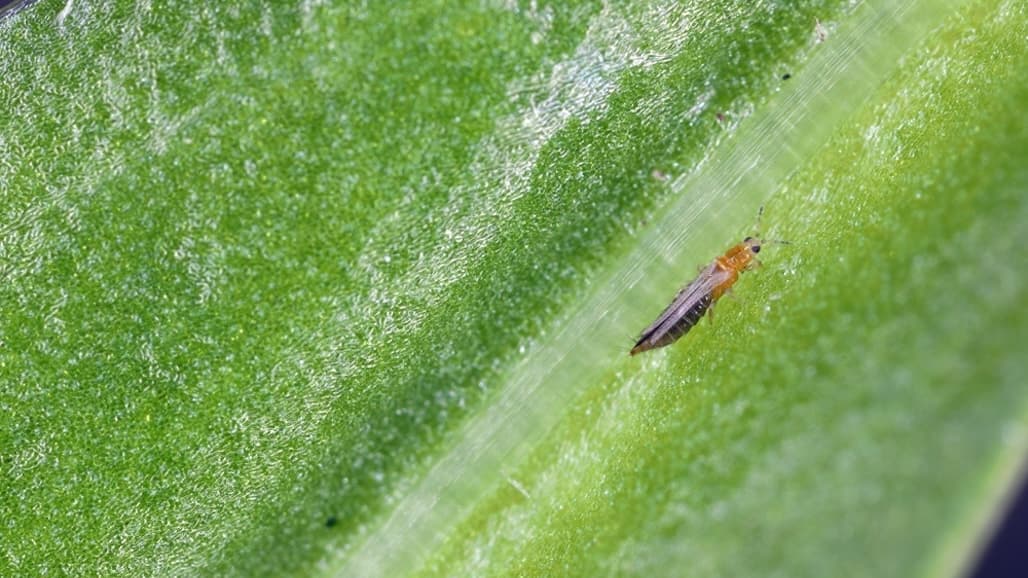
ARS researchers have developed new pest control methods for America’s farmers. Sulfur dioxide (SO2) has a long history of being used as a natural pest control in the past but is rarely used presently for postharvest pest control. Over the past several years, ARS researchers in Salinas, CA, have successfully developed SO2 fumigation treatments to control pests on fresh and stored products. One of pests controlled with SO2 fumigation on fresh produce is western flower thrips, which is a major pest of a wide variety of crops, a major vector of plant virus diseases, and a quarantined pest on some overseas markets – affecting U.S. exports of fresh fruit and vegetables.
SO2 fumigation was found very effective against western flower thrips and safe to select fresh products. Brief fumigation treatments of 30 and 60 minutes with 0.5 and 0.3% SO2, respectively, resulted in 100% mortality of the thrips at a cold storage temperature of 2C (36F). The 30-minutes treatment was also tested on four select fresh fruits and vegetables (broccoli, bell peppers, apples, and navel oranges). The fumigation had no negative impact on postharvest visual quality of bell peppers and oranges, which have smooth and robust waxy surfaces. However, it did cause severe discoloration of broccoli, which has rugged waxy cuticles. The treatment also caused darkening of open lenticles on apples. Results of the study suggest that SO2 fumigation has excellent potential to eliminate certain pests of select fresh fruit and vegetables safely and effectively. This would help curb food losses both in the field and post-harvest and maintain competitiveness of U.S. fresh produce in export markets.
— Story contributed by the USDA Ag Research Service