
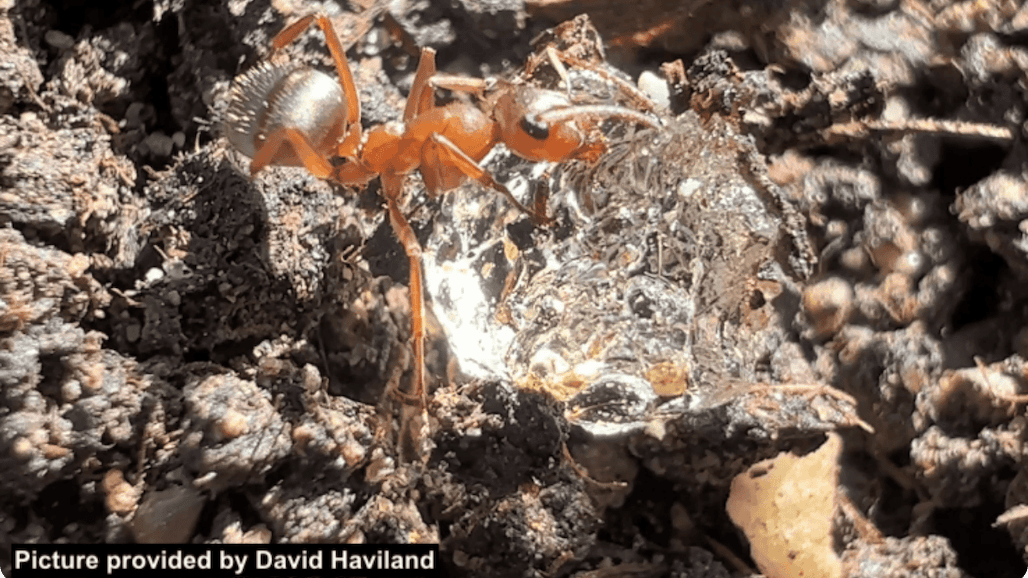
Sugar-feeding ants currently represent the single largest inhibitor of sustainable IPM programs in crops with phloem-feeding insect pests.
These ants feed on insect honeydew and aggressively protect invasive pests such as Asian citrus psyllid, citrus mealybug and vine mealybug from the natural enemies that would otherwise provide biological control.
Ant problems have been on the rise since chlorpyrifos was cancelled, and until a sustainable management method arises, efforts to maximize biological control will always fall short of their potential.
Hydrogel-based ant management programs represent a highly sustainable method for controlling sugar-feeding ants such as the Argentine ant and native grey ant.
These technologies rely on grower efforts to combine an ultra-low concentration of a pesticide with a hydrogel adjuvant to deliver the active ingredient to the soil surface where it can be collected by foraging ants.
After feeding, foragers take the solution below ground, where they introduce it into the communal feeding system within the nest, killing the entire colony.
The efficacy of this technology has been thoroughly documented in California citrus orchards and vineyards.
Advertisement
Eyes now turn to efforts to move this technology through the registration process at DPR so that it can be used commercially. This process has been complicated, as the novelty of this technology has required that DPR and the U.S. EPA interpret how laws that were written for traditional pesticides applied through traditional application methods should apply to this new technology.
The current status of the registration process is that two labels are under review by DPR. The first is a petition for a 24(c) SLN label for thiamethoxam that would allow it to be used with a hydrogel-based adjuvant for ant control. That petition was submitted to DPR in August. The second is a petition for a Section 3 label for a polyacrylamide-based hydrogel that could be used as an adjuvant. It was submitted in July. Through a separate process, alginate-based versions of hydrogels have already been determined to be exempt from registration.
The two labels that have been submitted to DPR represent years of collaborative efforts between UC scientists, product manufacturers, regulatory experts at DPR, and their counterparts at the U.S. EPA. Getting to where we are today has required a lot of innovation, creative thinking, willingness to try new approaches, and efforts by the regulatory experts to interpret how this unprecedented management system fits within existing regulations.
There is currently no formal timeline for how long the review process at DPR will take. However, DPR reviews of 24(c) SLN labels, and for Ca-only Section 3 labels for adjuvants, have historically taken a few months to complete. This gives hope that a determination could be made before the 2027 season begins.
As we look forward to DPR’s determination in this matter, plans are already underway to prepare for the potential for commercial use if the petitions are approved. Grant proposals to fund hands-on grower workshops on how to prepare and use hydrogel technologies have already been submitted in the hopes that these educational efforts can take place in advance of the 2027 season. Information about the registration status will also be included during presentations to industry this fall.
As we wait for a determination from DPR, please continue to advocate for this technology. When meeting with the folks at DPR, please highlight how this technology will contribute to your on-farm sustainability goals, and thank them for their service. The people I am working with at DPR are highly motivated to help growers gain access to this technology, especially considering the more than $1 million investment DPR made to support hydrogel research, and in fulfillment of goals associated with its own Sustainable Pest Management (SPM) Roadmap. — By David Haviland – UC Cooperative Extension, Kern County, CA